Fencing Installer Melbourne: Low-Maintenance Options for Busy Houses
Melbourne homes have a routine of keeping you active. In between job, college runs, weekend tasks, and the occasional "quick journey" that becomes a whole day out, your backyard winds up obtaining whatever focus you can spare. That's specifically why I invest a lot time speaking to customers regarding low-maintenance secure fencing. Not simply the product, however exactly how it's set up, just how it's mounted, and what you'll reasonably require to do once the post hole dirt has settled.
If you're hiring a fencing installer (or searching for fence installer Melbourne and fence installers Melbourne), the objective is simple: obtain something that looks tidy, holds up to our weather condition, and does not become an once a week duty. Below are the alternatives I see job best for hectic households, in addition to the information that make the difference between "looks wonderful for a couple of months" and "still looks respectable two or three years later on".
What "low-maintenance" in fact means in Melbourne
People usually make use of the phrase low-maintenance like it's a single product function. Actually, reduced upkeep is a mix of things:
- material that withstands bending, fading, and corrosion
- fixings and framing that do not loosen with time
- a format that avoids constant wetting and gunk accumulation
- and setup that accounts for neighborhood conditions like wind loads, dirt movement, and drainage
In Melbourne, rain is rarely mild. You obtain dry stretches, after that unexpected hefty downpours. That cycle stresses timber, highlights weak coatings, and reveals fencing articles that were established without proper focus to drainage. Wind is an additional aspect. Even if your fence is "only" a border fence, gusts can rack panels or place side tons on articles. When that takes place, the fence doesn't simply relocate a little, it starts to loosen up. That's where upkeep begins, because when a fencing starts to totter, dirt collects at the spaces and finishes get scuffed where rails rub.
So when you're selecting a fencing installer or taking a look at fencing installers Melbourne, try to assume past the final look and ask exactly how the installer plans for long-term stability.
The products that earn their place in busy homes
Not every low-maintenance fencing is maintenance-free. Also the very best systems need periodic checks. The distinction is whether those checks fast and seldom, or frequent and taxing.
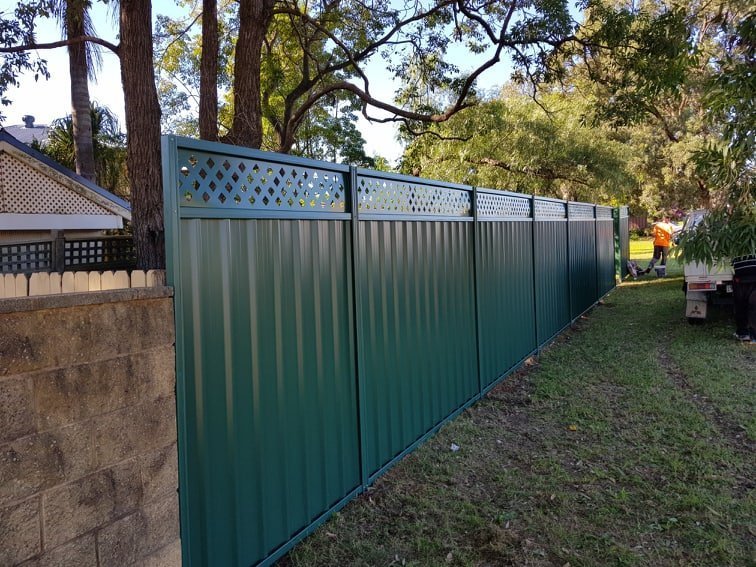
Colourbond steel and other coated steel systems
If you want the most convenient fence to deal with, covered steel is generally near the top. In day to day terms, it means less problems with rotting, pests, and warping. It likewise deals with Melbourne humidity and rain well, as long as the finish is audio and set up correctly.
What I try to find when I'm analyzing a steel fence for a client:
- quality of the coating, specifically at cut sides
- whether rails and messages are properly straightened, not "almost straight"
- secure repairing, so panels do not rattle in wind
- and appropriate clearances so water can drain instead of sit versus timber battens or joinery
An effectively mounted steel fencing commonly needs little bit more than a periodic rinse with water and a soft brush if you get hefty gunk. If you're near trees or hectic roadways, you could do a fast clean once or twice a year. The advantage is you are not fining sand, scraping, or sealing.
One compromise is that steel can show damages if a lawnmower or skateboard strikes it. If you've obtained children that deal with the yard like an obstacle course, you may still enjoy the appearance, yet it helps to pick a design that can take effects better, and approve small cosmetic marks as the price of a reduced upkeep build.
Composite and PVC-style panels
Composite panels and specific PVC systems can be genuinely reduced initiative. They do not rot like lumber and they do not rely on paint or discolorations to stay looking great. In a lot of cases, they're designed to resist fading and the surface is less parched than lumber, which helps with the "constantly somewhat damp" sensation that causes grime and mould.
The catch is that not all composite items act the same. Some can become discoloured if the finish is less stable. Some might expand and get more with temperature level swings if the system is not developed for it, which can bring about spaces if installment resistances are off.

If you're considering a fence installer Melbourne to set up composite or PVC-style secure fencing, ask how they take care of thermal motion and how the framework is set up to permit it. A fencing that is mounted too strictly can develop problems even if the panel material itself is strong.
Another practical point: if you're changing old fence, see to it the new system's bottom clearance and drainage match the reality of your website. I've seen "reduced maintenance" end up being "consistent cleansing" because the panels were installed so low that mud sprayed up and dried out there every winter.
Treated lumber and wood alternatives, done the right way
Timber is not automatically high maintenance, but it is less forgiving. If you want a lumber fence that does not turn into a project, you require to pick the best varieties or therapy and afterwards set it up so it can last without consistent attention.
For some homes, timber still wins on appearance and expense. The best outcomes typically come from:
- using appropriate treated hardwood for the direct exposure level
- allowing for water drainage so water does not kick back posts
- proper spacing and airflow, which minimizes mould and keeps surface areas drier
- and utilizing appropriate fixings that won't corrode and stain
Hardwood can be harder and longer lasting, however it still needs practical detailing. If the fencing is installed with inadequate article embedding, or if ground degrees cause water to stay around the base, you obtain rot where you do not anticipate it. That is when consumers tell me, "We thought this would be reduced maintenance." It wasn't the hardwood's fault completely. It was the atmosphere working against the installation.
When individuals inquire about staining or securing, I take a useful approach. Some finishes can assist, however over the long term, any wood surface area finish is subjected to UV and rain. The concern is not "will it require focus," it's "just how much focus and how typically". A tactical hardwood fencing might require occasional re-coating every couple of years as opposed to annual touch-ups. However the only honest way to estimate that is to look at the fence's exposure. A fence in complete sun acts differently from one put behind a hedge.
Brick, provided, and rock boundaries
Masonry boundaries are the utmost set-and-forget choice in terms of rot and bending. They festinate for several years. Yet I'll be straight with you, they are not always the simplest option for active homes due to the fact that they can require more up-front planning and sometimes much more complex construction.
If your website fits it, a stonework border can be outstanding low maintenance. Simply recognize hairline cracking, mortar repointing over time, and the periodic requirement to take care of plant growth versus the wall. Still, contrasted to hardwood, stonework often tends to be a "check, do not keep" scenario for many properties.
If you're taking into consideration stonework, the largest variable is the surrounding drain and footing information. A wall surface that is great in completely dry weather however experiences water pooling at its base will at some point show it.
The installment details that quietly decide your upkeep level
I can inform you which products tend to last, but maintenance is mostly decided throughout installment. An excellent fence installer is thinking of tons courses, stability, and drainage from the initial post.
Here are things that matter on the ground:
Post setup, drainage, and ground movement
Posts are the fence's anchors. If you want reduced maintenance, you desire messages to remain solid. That comes down to sufficient depth, correct concrete mix decisions (reasonably, installers will certainly work to their technique and neighborhood method), and making sure the blog post base is not continuously soaking.
Melbourne dirts can vary, and some websites have clay-like motion with wet and completely dry cycles. When blog posts shift, fences sag, rails loosen, and spaces form. After that you get dust accumulation and ultimate equipment exhaustion. It's remarkable just how rapidly "small activity" ends up being visible.
This is where hiring reputable fence installers Melbourne repays. You don't simply desire "someone that can set up a fencing," you want an installer that understands just how your site behaves.
Rail positioning and panel tension
A typical reason fences rattle is imbalance. If rails are not established square or panels are not installed within the system's design tolerances, you wind up with irregular stress and anxiety. That stress appears as loosened repairings, squeaking, and a surface that marks quickly.
For steel or composite, you desire constant spacing and straight runs. It impacts both appearance and long-term durability.
Fixings, voids, and water management
Fixings are tiny, but they make a huge distinction. If stainless or ideal corrosion-resistant mendings are made use of, your fencing avoids a sluggish "rust and tarnish" stage that otherwise consumes right into the upkeep promise.
Gaps additionally matter. As well tight at the ground degree and you trap dampness and dust. Too expensive and you allow debris to lodge where you can not quickly clean. The best concession depends on whether you have actually obtained dirt splashes, lawn sprinklers, and close-by landscaping.
If you have actually obtained a busy household with sprinklers on timers, it deserves examining the watering pattern. I have actually seen fences where the lawn sprinkler hits the base continuously, then the proprietors question why the lower rails look grim by late winter.
Quick truth check: which option fits your schedule
To assistance you assume it through, below's an easy way I assist clients. You don't need to understand product chemistry, you simply need to be straightforward about your resistance for chores.
If your fencing will likely be "unseen, out of mind," coated steel or well-designed compound is generally one of the most realistic fit. If you want the warm look of lumber and you're fine with occasional upkeep, a top quality lumber system can still work well, however you ought to prepare for some upkeep and pick describing that lowers it.
If you're stabilizing personal privacy with appearance, slat-style fences and panel systems can both deliver. Yet slats can catch debris differently than solid panels, and particles suggests cleaning. It's not the most awful thing, just an additional variable.
If you have youngsters, pets, or frequent yard task, longevity in real life matters greater than just "what the fence appears like on installation day". A fencing that dents conveniently could still be low maintenance, yet it might likewise end up being a regular "patch it" migraine. I've learned to inquire about exactly how people actually utilize the yard. That typically informs me greater than the preliminary style brief.
A functional comparison for low-maintenance choices
You can definitely select the best fence without ending up being a specialist. Still, comparing the choices aids narrow decisions quickly.
|Material technique|Regular upkeep degree|Main thing that can go wrong|Best fit for busy homes||-- |-- |-- |--|| colourbond or covered steel|reduced, occasional rinse and fast check|damages, coating wear if improperly fixed|excellent for minimal difficulty|| composite/ PVC-style panels|low to moderate, occasional wash|fading or problems if not installed for movement|terrific when you want "established it and neglect it"|| dealt with wood or hardwood|modest, regular re-coating or spot work|rot at bases if drainage is poor|alright if you prepare light continuous care|| stonework limit|really low, periodic checks and minor repair work|cracking, plant development against the wall|best for "hands-off" borders|
If you're favoring any one of these alternatives, it assists to ask your installer what maintenance they expect throughout the very first few years. A reliable fencing installer need to be able to give a sensible answer instead of obscure promises.
One brief checklist before you schedule a fencing installer
Once you select the material, the next win is selecting the right fence installer for the job. This is the brief set of concerns I advise, specifically if you are busy and want the process to be smooth.
- Ask exactly how they establish posts and take care of drainage at the base
- Confirm the taking care of types and how cut sides are dealt with for steel systems
- Check whether they factor in fence alignment and wind loading for your design
- Request a clear quote that consists of demolition, disposal, and any kind of handover clean-up
- Get a maintenance expectation for the initial 12 to 24 months, in ordinary language
These concerns conserve time later. If the answers are unclear, that's your signal to keep looking.
How to keep your fence looking good without transforming it right into a weekend project
Even low-maintenance fencings benefit from a light, constant routine. The goal is to stop dust and wetness from building up in places you can not conveniently reach.
The "two-minute check" habit
Instead of waiting until something looks wrong, do a fast scan after big weather occasions. Try to find panels that have actually changed, correctings that look raised, and any kind of spots where water seems to swimming pool. You can do this quickly, and it stops bigger repairs.
When I speak with house owners, many people don't mind a short check. They mind shock repairs. If you capture a wobble early, you might only need tightening up and realignment. If you let it go, the underlying message activity has to be dealt with, which gets expensive.
Cleaning without damage
For covered steel, a gentle rinse is typically enough. If you require a lot more, a soft brush and non-abrasive cleanser gets the job done without chewing up coatings.
For composite and PVC-style panels, prevent harsh solvents. They might eliminate marks, yet they can also damage surfaces over time. Stick to what the product enables. If you don't have the manufacturer's assistance, ask the installer what they advise for that product system.
Timber fences gain from perseverance. If you allow mould or grime sit for as well long, you end up needing stronger cleaning later on. If you capture it early, a less complex clean is often sufficient. The secret is uniformity, not intensity.
Vegetation control
Hedges and vines look great up until they start pressing against fencings. Leaves trap moisture and branches scratch finishes. If you're attempting to maintain upkeep reduced, you require light gardening around the fence line, yet it doesn't need to be constant. Even trimming back greenery one or two times a year can make a large difference.
Common fencing issues in busy homes, and exactly how to avoid them
I've serviced a lot of "we hardly make use of the backyard" situations that still wound up with fencing issues. The lawn wasn't the problem. Climate and setup information were.
Here are a couple of usual ones I see.
The fencing looks penalty, after that begins to sag after rain
This typically points to post setup or ground problems that weren't appropriately represented. If blog posts were mounted too superficial, or the dirt was disturbed after installation without correct curing and security, sag occurs. It's not always remarkable initially. Sometimes it's refined alignment changes that you only discover when the gate stops shutting cleanly.
A low-maintenance strategy need to include solid stability, not simply a good first impression.
Hardware corrosion marks and "unclean" staining
If steel mendings were not appropriate or if the fencing system's cut sides weren't treated effectively, you can get rust discoloration. As soon as discoloring beginnings, it tends to spread because dampness gets involved in micro spaces. That transforms low-maintenance right into recurring cleansing and possible replacement.
This is why I like to see a proper spec for repairings, also if you're not the sort of property owner who checks out technical documents. You can request the information and the installer ought to be comfortable describing them.
Panels that massage and squeal in wind
Wind racking prevails, however squealing recommends misalignment or loosened up dealings with. In hectic homes, the squeak comes to be background sound till you begin discovering it on nights when the wind picks up. The fix is typically not complicated, but it's easier if you catch it early.
Choosing the best style while maintaining upkeep low
Privacy is usually the major objective. But design impacts upkeep, too.
Solid panels conceal dirt far better than open slats, and they likewise minimize the buildup of fallen leaves ahead surfaces. Lattice and attractive layouts typically look excellent, yet they can produce more surface areas for crud to stick to.
If your fencing runs long, the design choice issues because any type of maintenance ends up being time-costly over range. For hectic families, I frequently guide customers toward fence designs with fewer hard-to-reach surface areas and less small holes where leaves and compost obtain lodged.
That does not indicate you need to choose level. It means you choose a design that matches just how you really maintain your lawn and just how usually you wish to consider your fence.
Working with a Melbourne fence installer without the stress
A good installment experience belongs to the low-maintenance assurance. If the job is hurried, corners obtain cut, and the fence becomes your recurring problem.
When you contact installers, pay attention to just how they deal with the essentials: website dimension, item choice, duration communication, and after-install guidance. Also if you're not technical, you'll feel the distinction in between "we can do it" and "we'll establish it up correctly".
If you have actually ever had tradespeople appear with vague strategies and a half-formed material idea, you know what that does to a busy schedule. Fence installation is not like a quick repair service. It impacts your driveway access, landscaping locations, and sometimes your gateway operation. An expert fencing installer will certainly coordinate around that, describe the actions clearly, and not leave you guessing.
Final thoughts on low-maintenance secure fencing in Melbourne
Low-maintenance fence is less about going after the newest product and even more concerning matching the best system to your building, your direct exposure, and your resistance for occasional maintenance. For many active Melbourne homes, covered steel and composite designs struck a wonderful place: they resist rot, prevent frequent repainting, and remain clean with basic care.
Timber can likewise work wonderfully, as long as you treat drainage and blog post security as non-negotiable. Masonry is the long-game alternative when you desire a boundary that mostly just needs checking, not fixing.
If you're searching for Fence installer Melbourne, Fence installers Melbourne, Fencing installer Melbourne, or Fencing installers Melbourne, choose based upon process as much as product. Ask inquiries, confirm installation details, and demand a clear assumption of what maintenance you will in fact do after setup day.
A fencing must make your weekend breaks less complicated, not more busy. The appropriate choice will certainly show up every time you glance at the limit and think, "That's still looking excellent."